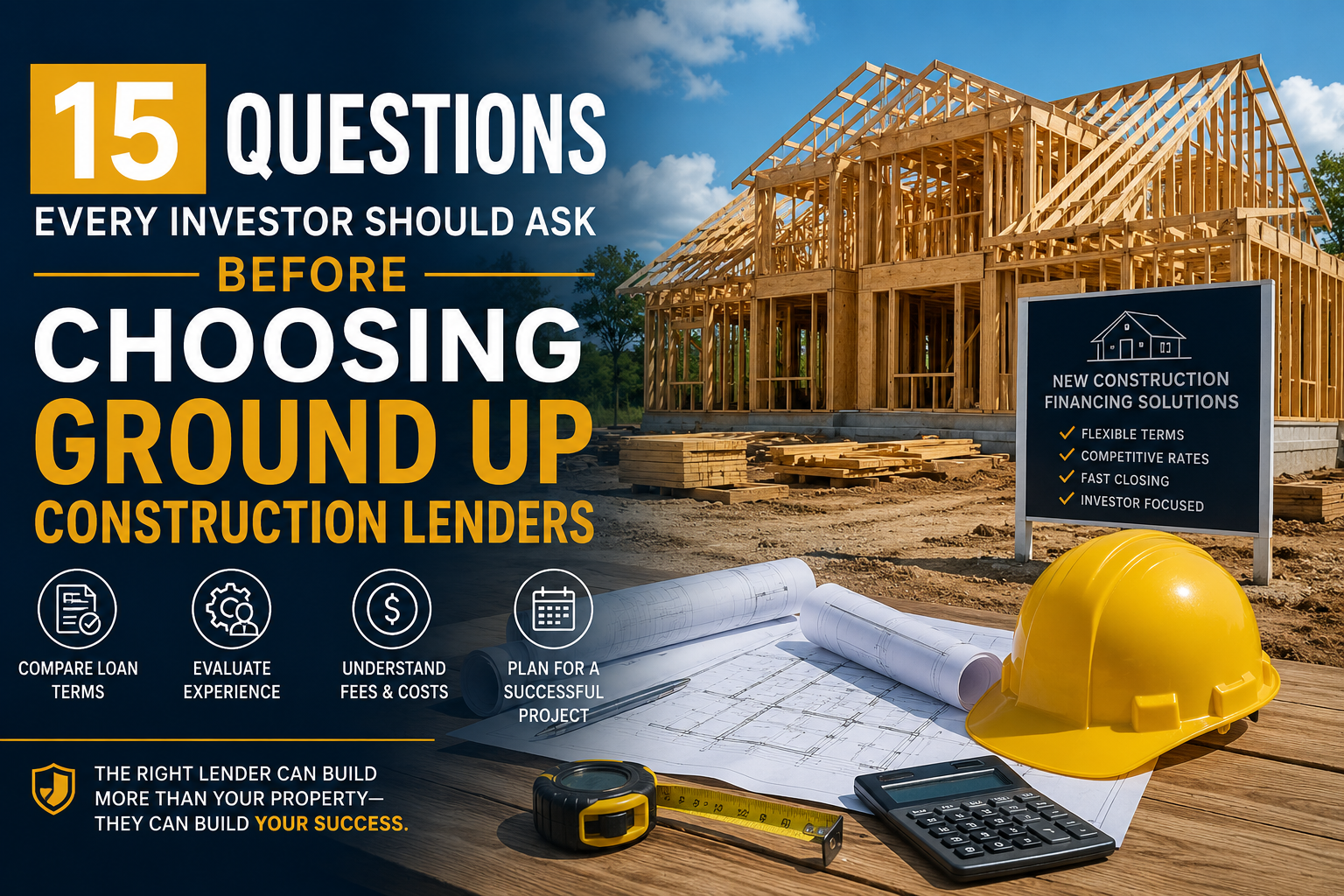
Building a property from the ground up can be one of the most profitable real estate investment strategies in the United States. Whether you are developing a single family home, duplex, townhome, or a small residential community, the right financing can make a major difference in your project’s success.
Many investors focus only on finding the lowest interest rate. While pricing is important, choosing the right lender involves much more than comparing rates. The lender you select will influence how quickly your loan closes, how construction funds are released, how unexpected challenges are handled, and ultimately whether your project stays on schedule and within budget.
That is why asking the right questions before choosing among ground up construction lenders is one of the smartest steps you can take. A lender who understands real estate investing, construction timelines, and market conditions can become a long term financial partner instead of simply providing funding.
This guide covers 15 important questions every investor should ask before selecting a lender. These questions will help you compare lenders, avoid costly mistakes, and choose financing that supports your investment goals.
Why Choosing the Right Lender Matters
Unlike traditional home mortgages, ground up construction loans involve multiple stages. Funds are typically released in phases as construction progresses. The lender reviews project budgets, building plans, permits, contractor qualifications, and expected property value after completion.
Because every construction project is unique, the lender’s experience, communication, and flexibility often matter just as much as the loan terms.
Many investors also choose Private lenders for ground up construction because they often provide faster approvals, flexible underwriting, and financing solutions designed specifically for investment properties.
1. What Types of Projects Do You Finance?
Not every lender finances every type of construction project.
Some lenders specialize in custom homes, while others finance investment properties, rental homes, subdivisions, or multifamily developments.
Ask whether the lender has experience financing projects similar to yours.
A lender that regularly funds projects like yours will better understand the challenges you may face during construction.
2. How Much of the Project Cost Will You Finance?
Every lender has different lending guidelines.
Ask about the maximum loan amount based on:
- Land value
- Construction costs
- Loan to cost ratio
- Loan to value ratio after completion
Understanding these limits helps you determine how much cash you need before construction begins.
3. What Are Your Loan Qualification Requirements?
Loan approval depends on several factors.
Ask what the lender reviews, including:
- Credit history
- Construction experience
- Liquidity
- Cash reserves
- Property location
- Contractor qualifications
- Project feasibility
Knowing these requirements early helps you prepare a stronger loan application.
4. How Long Does the Approval Process Take?
Time is often critical in real estate investing.
Some projects cannot begin until financing is secured.
Ask questions such as:
- How long does pre approval take?
- How long does underwriting usually take?
- When can the loan close?
- What documents are required?
Many Private lenders for ground up construction can often close loans faster than traditional financial institutions.
5. How Does the Construction Draw Process Work?
One of the biggest differences between construction financing and conventional loans is the draw schedule.
Instead of receiving all funds upfront, money is released throughout construction.
Ask about:
- Draw frequency
- Inspection process
- Turnaround time
- Required paperwork
- Digital draw requests
A smooth draw process keeps contractors paid and projects moving.
6. What Fees Should I Expect?
Interest rate is only one part of the total borrowing cost.
Ask about:
- Origination fees
- Inspection fees
- Closing costs
- Extension fees
- Administrative charges
- Legal expenses
Understanding all fees helps you create a realistic project budget.
7. What Happens If Construction Costs Increase?
Material prices, labor costs, and permitting expenses can change during construction.
Ask how the lender handles unexpected cost increases.
Questions include:
- Can the loan amount be adjusted?
- Are contingency reserves required?
- What happens if costs exceed the original budget?
Planning ahead reduces financial stress later.
8. How Are Contractors Evaluated?
Many ground up construction lenders review the contractor before approving financing.
Ask:
- Does the contractor need previous experience?
- Is licensing required?
- Do you review references?
- Are insurance documents required?
Choosing an experienced contractor often improves both approval chances and project success.
9. What Happens If Construction Takes Longer Than Expected?
Construction delays are common.
Weather, permit issues, inspections, labor shortages, and supply chain problems can all extend project timelines.
Ask:
- Are loan extensions available?
- What are extension fees?
- How long can the loan be extended?
- What documentation is required?
Understanding these policies before signing the loan agreement prevents surprises later.
10. How Will Interest Payments Work?
Many investors are surprised by how construction loan payments work.
Ask:
- Is interest charged only on funds already disbursed?
- Are interest only payments available?
- Is there an interest reserve?
- When does principal repayment begin?
Knowing the payment structure helps improve cash flow planning throughout construction.
11. What Experience Do You Have With Investment Properties?
Not every lender understands investment focused construction projects.
An experienced lender can provide valuable insight regarding:
- Market trends
- Property values
- Exit strategies
- Construction timelines
- Risk management
Choosing experienced ground up construction lenders often leads to a smoother borrowing experience.
12. What Is Your Communication Process?
Construction projects require constant communication.
Ask:
- Will I have a dedicated loan officer?
- Who handles inspections?
- How quickly are emails answered?
- Can I track loan progress online?
Responsive communication reduces delays and keeps projects moving efficiently.
13. What Exit Strategies Do You Support?
Every investor should have a clear plan before construction begins.
Ask whether the lender supports your preferred exit strategy.
Examples include:
- Selling after completion
- Refinancing into a rental loan
- Holding as a long term investment
- Building a portfolio of rental properties
A lender familiar with multiple exit strategies can provide financing that matches your long term goals.
14. Can You Finance Future Projects?
Many successful investors complete multiple projects over time.
Ask whether the lender works with repeat borrowers.
Benefits may include:
- Faster approvals
- Simplified documentation
- Better loan terms
- Stronger lending relationship
Working with the same lender can save time on future developments.
15. Why Should I Choose Your Lending Team?
This simple question often provides valuable insight.
Listen for answers that explain:
- Industry experience
- Construction expertise
- Speed of closing
- Customer service
- Flexibility
- Local market knowledge
- Long term partnerships
The best lenders focus on helping investors succeed rather than simply approving loans.
Red Flags to Watch Before Choosing a Lender
While comparing lenders, be cautious if you notice any of these warning signs:
- Unclear loan terms
- Hidden fees
- Slow communication
- Limited construction experience
- Unrealistic promises
- Poor online reviews
- Confusing draw procedures
- Lack of transparency
A trustworthy lender should clearly explain every part of the financing process before closing.
Why Many Investors Choose Private Lenders for Ground Up Construction
Many experienced real estate investors work with Private lenders for ground up construction because they often offer advantages that fit investment projects.
Potential benefits include:
- Faster loan approvals
- Flexible underwriting
- Experience with investment properties
- Efficient construction draw management
- Financing for unique projects
- Personalized customer service
- Flexible exit strategy options
While every lender has different requirements, private lending has become a popular financing choice for investors seeking speed and flexibility.
Tips for Comparing Ground Up Construction Lenders
Before making your final decision, compare lenders using the same criteria.
Review:
- Interest rates
- Total loan costs
- Loan terms
- Construction draw process
- Customer reviews
- Closing timelines
- Communication quality
- Industry experience
- Flexibility during construction
- Support after loan closing
Looking beyond interest rates often leads to better long term investment results.
Final Thoughts
Choosing among ground up construction lenders is one of the most important decisions you’ll make before starting a development project. The right lender does more than provide financing. They become a valuable partner throughout planning, construction, inspections, and project completion.
By asking these 15 questions, you will better understand each lender’s experience, loan structure, communication style, and ability to support your investment goals.
Whether you are building your first investment property or expanding an established portfolio, selecting the right financing partner can help reduce delays, improve cash flow, and increase the likelihood of a successful project.
Take time to compare lenders carefully, review every loan detail, and choose a financing solution that aligns with both your current project and your long term real estate investment strategy.
Frequently Asked Questions
What are ground up construction loans?
Ground up construction loans are short term financing solutions that help investors build new residential or commercial properties from vacant land. Loan funds are usually released in stages as construction progresses.
How do ground up construction lenders decide whether to approve a loan?
Most lenders review the borrower’s financial profile, construction experience, project budget, building plans, contractor qualifications, expected property value after completion, and overall project feasibility.
Why do investors choose Private lenders for ground up construction?
Many investors choose Private lenders for ground up construction because they often offer faster approvals, flexible underwriting, quicker closings, and financing options designed specifically for investment properties.
How much down payment is usually required for a ground up construction loan?
The required down payment varies by lender, project type, and borrower qualifications. Many lenders finance a percentage of the total project cost, requiring investors to contribute the remaining amount.
How are construction loan funds released?
Funds are typically distributed through scheduled construction draws. After inspections confirm completed work, the lender releases funds for the next phase of construction.
Can first time investors qualify for ground up construction loans?
Yes. Some lenders finance first time investors, especially when they have strong financial qualifications, experienced contractors, and a well planned construction project.
What happens if construction is delayed?
Many lenders offer loan extension options, although additional fees or updated documentation may be required. It is important to understand the lender’s extension policy before closing.
Can a ground up construction loan be refinanced after the project is complete?
Yes. Many investors refinance into long term rental or conventional financing after construction is finished and the property is ready for occupancy.
How long does it take to close a ground up construction loan?
Closing timelines vary depending on the lender and project complexity. Many private lenders can close more quickly than traditional banks once all required documents have been submitted.
What should I compare when choosing ground up construction lenders?
Compare experience, loan terms, interest rates, fees, draw schedules, communication, customer reviews, flexibility, and their experience financing projects similar to yours. Choosing a lender based on overall value instead of interest rate alone often leads to a smoother construction process.